



This is an easy recipe for soft and fluffy Easter Pinzen. In Austria, these soft brioche buns are very popular for Easter!
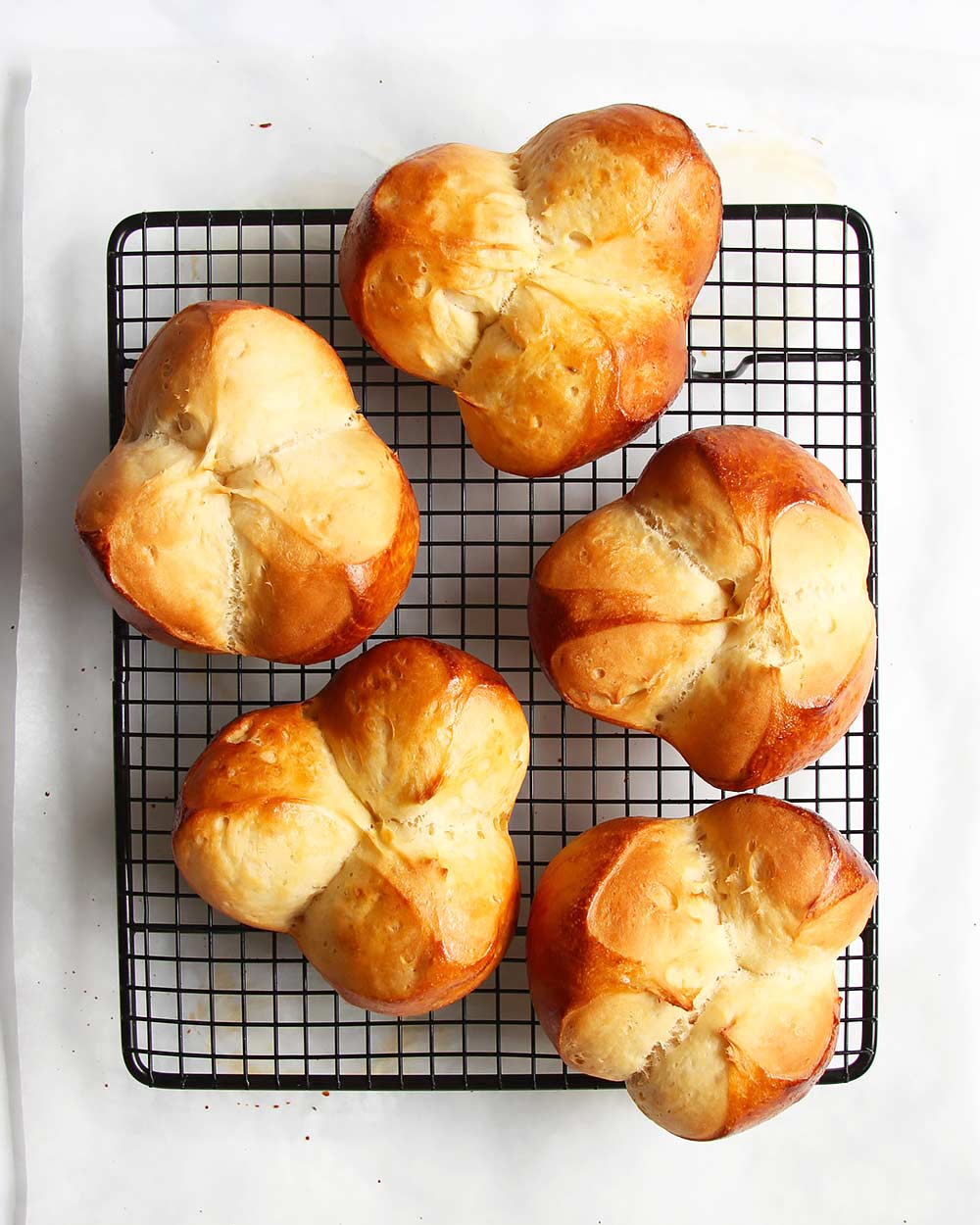
What are Easter Pinzen?
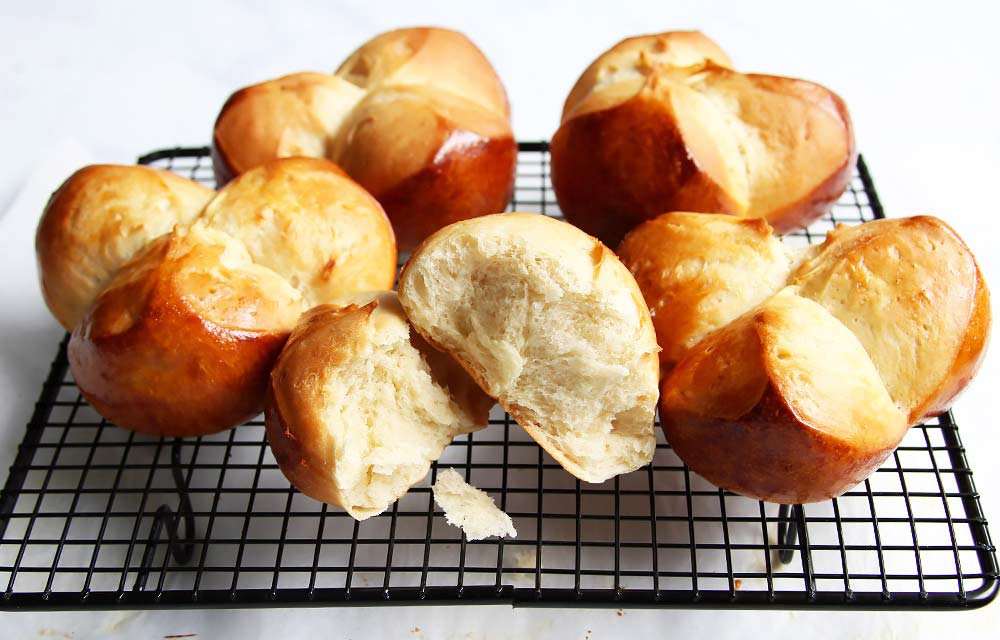
These light and fluffy brioche rolls, called “Osterpinzen” in Austria, are traditionally made for the Easter holidays. In fact, they are only available to buy around Easter time. You’ll get them at bakeries, markets and grocery stores – but they are best when homemade and fresh out of the oven!
The “Osterpinze” is a type of Easter bread made with enriched yeast dough, which is flavored with white wine, anise, and lemon zest. I usually omit the white wine and anise since I am not the biggest fan of those flavors in these baked goods but you can totally add them for the most authentic taste. I’ve made a note in the recipe card below in case you want the traditional anise flavored Pinzen.
Origin of Easter Pinzen
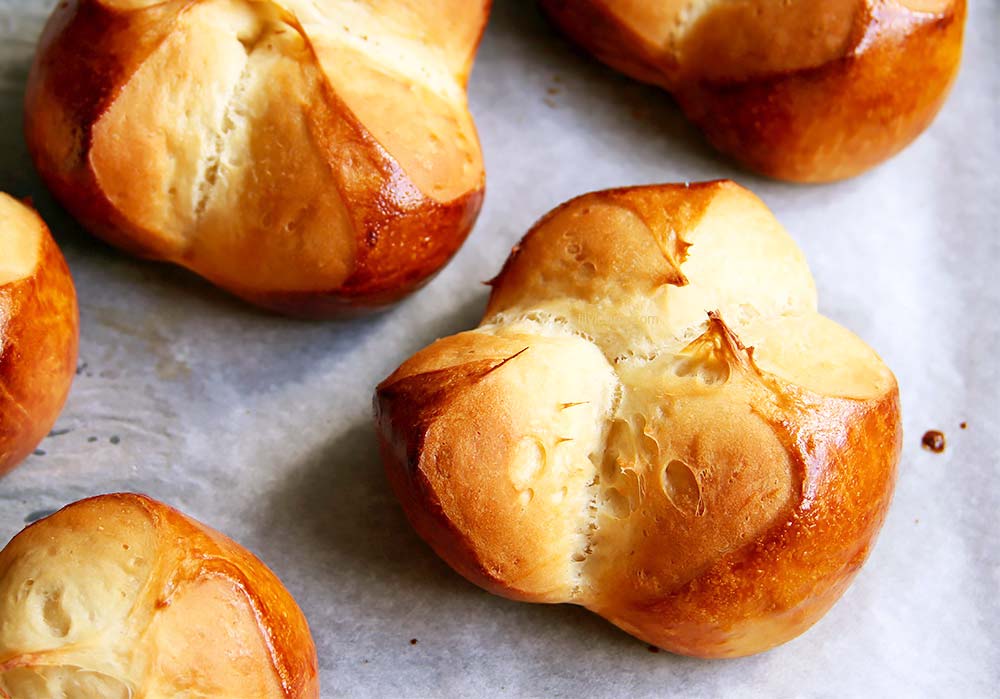
The Easter Pinzen’s origin can be traced back to Italy. From there, they made their way north to Austria’s southern provinces. That’s why Easter Pinzen are widely spread in Carinthia and Styria, the southernmost regions in Austria, just a hop away from Italy.
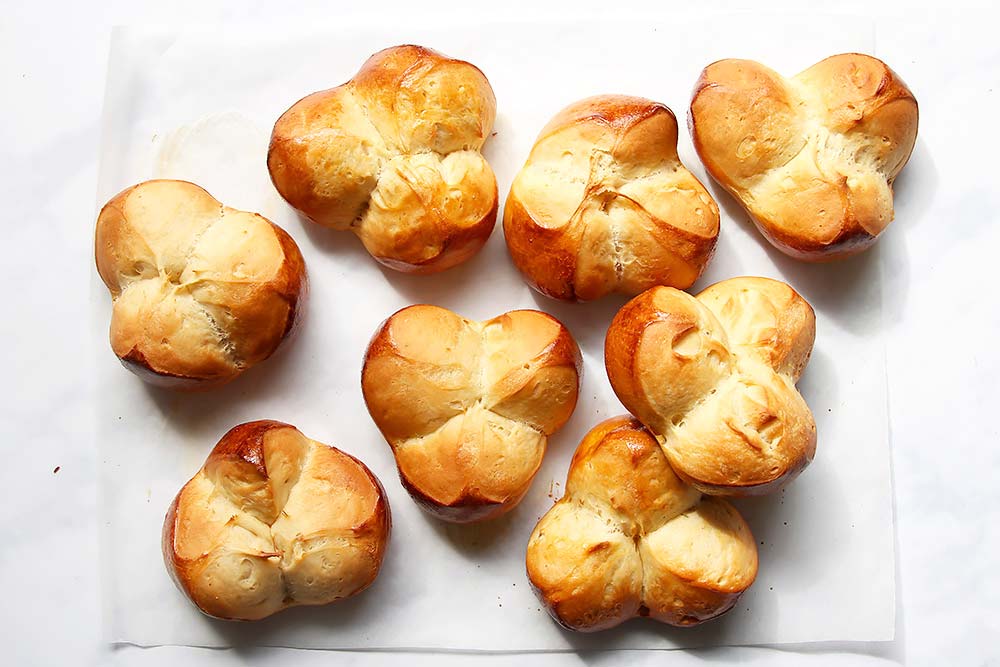
The name “Pinzen” also derives from the Italian word “pinza”, which means pliers or scissors. The buns are cut into 3 sections with scissors after rising and before baking – that’s where they get their name and distinctive appearance from.
How to make Easter Pinzen
I’ve kept this recipe as simple and fuss-free as possible. The lightly sweet yeast dough contains one whole egg instead of the usual 3 egg yolks. It works as well and you don’t have to fuss around with leftover egg whites.
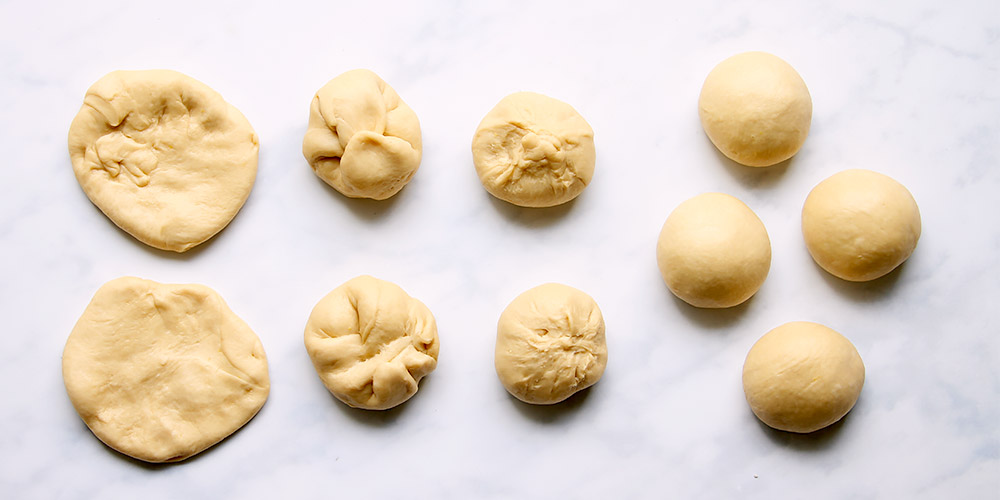
The dough needs to rise until doubled in volume. I then cut it into 10 portions, form into balls and let them rise again until puffy.
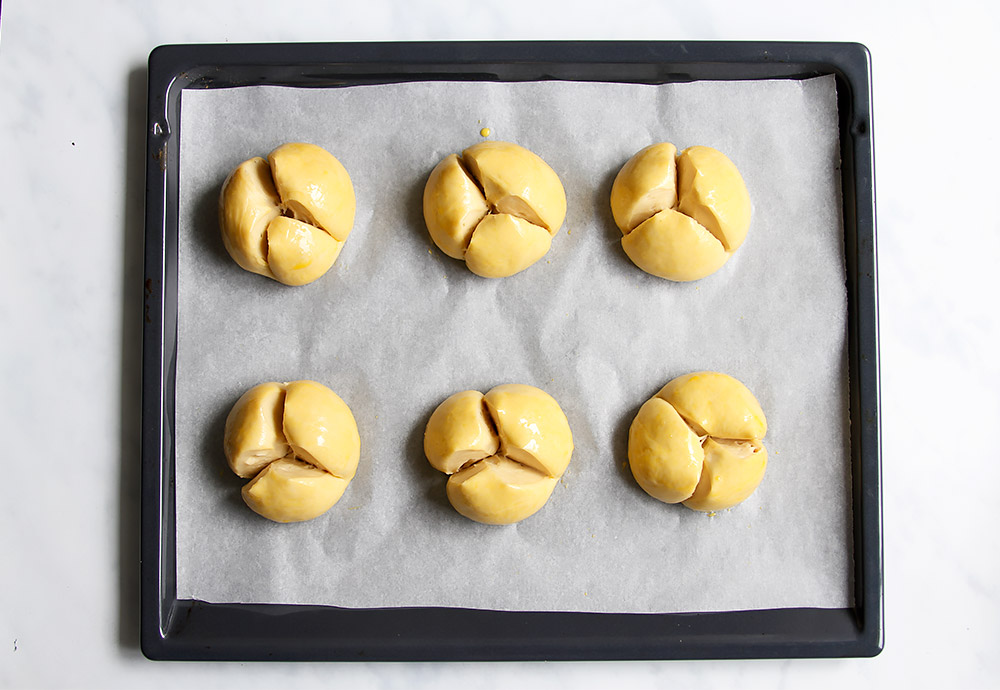
After this second rise comes the special part: You will have to cut them using scissors into 3 sections. Then I brush them with egg-wash and bake them. Easy as that!
Video: How to shape Osterpinzen
I’ve made a short video on how to cut Easter Pinzen. Hope this helps.
How to eat and serve Osterpinzen
Easter Pinzen make for a great breakfast and brunch (Easter Sunday!) but are also widely enjoyed in the evening for “Jause” – usually served in combination with a charcuterie/cheese board. These Easter rolls with their subtle sweetness will go great with the traditional Austrian Easter Jause with colored hard-boiled eggs, ham, and grated horseradish.
More recipes for Easter
Did you make this recipe? Let me know in the comments how it turned out and also leave me a star rating if you want :)
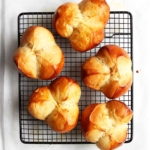
Austrian Easter Brioche Buns (Osterpinzen)
Ingredients
- 1 cup + 2 tablespoons (270 ml) lukewarm milk
- 2 1/4 teaspoons (7 g) instant dry yeast
- 5 1/3 tablespoons (75 g) unsalted butter, melted
- 1/4 cup + 1 tablespoon (65 g) sugar
- 1 egg (large in the US, medium in Europe)
- zest of 1 organic lemon
- 1 teaspoon (6 g) fine salt
- 500 g (about 4 cups) bread flour (also works with AP-flour)
For brushing:
- 1 egg yolk + 1 tablespoon milk
Instructions
Make the dough and 1st rise:
- You can make the dough by hand or in a stand mixer with the dough hook attachment. In a large bowl add warm milk, sprinkle instant yeast on top and let it sit for 1 minute (or 5 minutes if using active dry yeast). Meanwhile, melt butter and let cool.
- Add sugar, egg, lemon zest, melted butter, and salt to the bowl with the milk. Briefly mix everything with the dough hook or a cooking spoon. Add roughly half of the flour and stir until combined and then add the rest of the flour.
- Knead 7-10 minutes until the dough is smooth, moist, and elastic. If kneading by hand, I usually do it directly in the bowl since the dough is pretty tacky. The dough should clear the sides of the bowl towards the end of the kneading time. If not, add a bit additional flour (tablespoon by tablespoon).
- Let the dough rise, covered, at warm room temperature until doubled in size, about 1 to 1½ hours. At cool room temperature it takes a bit longer. See note if you want to do a cold, long rise. Line 2 baking sheets with parchment paper.
Shape dough into balls and 2nd rise:
- Divide the dough into 10 equal portions and shape into balls. To do so, flatten each piece on an unfloured working surface and fold the edges inwards to the center, then pinch the ends together. Turn seam-side down and roll the ball under your palm on the counter to get a smooth shape.
- Transfer balls to the prepared baking sheets. Combine egg yolk and milk for the egg-wash. Brush balls with egg-wash (keep leftovers for later). Let buns rise, uncovered, until puffy, about 30-45 minutes. You can put them in a slightly warm oven to speed up the rise.
- Preheat oven to 375°F (190°C) or if using a fan-oven to 350°F (175°C). At the end of the 2nd rise, brush buns again with egg-wash (thin with more milk if there is too little left). Let the egg-wash dry for 1-2 minutes.
Score buns and bake:
- Cut the buns 3 times from the centre to the edge with a pair of scissors (make deep cuts, see video above for reference). If you have leftover egg-wash, you can brush the cut surface too. The sections will grow back together while baking and will result in the distinctive Pinzen shape.
- Add sheets to the preheated oven and bake until the buns are risen and golden brown, about 15-20 minutes. If using a fan oven, add both sheets at once. If using an oven with top and bottom heat bake one sheet at a time or if baking both sheets at once, swap half-way through for even browning.
- Let the Pinzen cool for a bit and enjoy when still warm. The Pinzen taste best on the baking day. Store leftover buns in an airtight container (they keep a few days) and reheat in the microwave for a few seconds until warm before serving – this way they will soften. Or reheat at 300°F (150°C) for 5 minutes in the oven.
Hi,
Made those and they came out excellent.
Hi Anna,
so happy to hear that they turned out well. I bake them every year :) Thanks so much for leaving a comment!
Ursula
Sound delish Caster sugar or Plain white sugar??
Hi Kim,
I use simple granulated white sugar (the sugar granules are kind of small, but not as fine as in powdered sugar). But really, anything goes in this recipe :)
Ursula
Also pleased you put Grams & Mls or cups & spoons in METHOD.
Made a Malva pudding Friday Chef only did in cups 3/4 cup + 2 tablespn flour so weighed flour 3/4 cup =135 grs + 35 grms =2 tablespns
Did all then ready to put in oven Our German chef taught us to read & then reread recipe.
noted the 35 grm flour still on bench in small glass dish reread recipe does not say add 2 tbspns floor in Method at a particular point then penny dropped if chef had put in grams = 170 g that was the 2 tablespn that didn’t fit in 3/4 cup measure As Use
1 cup, 1/2 cup, 3/4 cup & 1/4 cup for baking
The origin of Pinza (Italian) or Pinca (Slovenian, Istrian) is a bit more complex, and is the result of mixed population during Venetian and Habsburg times (if not even earlier). By the way, Carinthia and Styria are also “shared” between Austria and Slovenia – a little hop means a country, it
may well be that Slovenians (at the time part of Habsburg) might have brought it to Vienna. “Forgetting “ the historical facts is not cool, this time I agree with AI:
Crediting just one group or country for Pinza / Pinca is historically inaccurate. The bread did not develop within a single ethnic or national bubble. It belongs strictly to a shared regional identity that predates modern political borders.To look at why naming just one is inaccurate, we can see three key reasons:
1. The Territory Was Inseparable
For centuries, the city of Trieste and the surrounding Slovenian littoral (Goriška and Istria) were economically and socially locked together.Slovenian farmers from the countryside supplied the milk, butter, and eggs.Triestine urban bakers and port merchants provided the imported sugar, rum, and citrus zest.The bread required both sides of the ecosystem to exist.
2. Double Identity of Local Families
The population itself was deeply mixed. Many families in the region spoke Slovenian at home and Italian in the marketplace. When a woman baked this bread for Easter in 1850, she didn’t view it as an “Italian” or “Slovenian” act. She was simply practicing a regional Catholic ritual common to the Northern Adriatic.
3. Shared Culinary Language
the traditional Easter breakfast menu is identical across the language barrier. Whether you call it Pinza or Pinca, it is served exactly the same way: sliced alongside warm cooked ham, hard-boiled eggs, and freshly grated horseradish (kren).
Describing it purely as “Italian” ignores the Slavic hands that shaped its history, while calling it strictly “Slovenian” ignores its Roman linguistic roots and Venetian culinary origins. It is a true transborder heritage.
Of course, the Pinza/Pinca/Pinze is a mix of various countries. Btw, AI also says: “The Easter pinca (or pinza) originated in Italy, specifically in the Venetian provinces of Trieste and Gorizia. Over centuries, this sweet bread spread across the Adriatic, becoming a staple in the Slovenian Littoral and the historical regions of Istria and Dalmatia in Croatia.While it is shared across these cultures today, its roots trace back to Italian tradition” – so I would take everything that AI says with a grain of salt. Let’s not forget where AI is getting all the information from.
Best,
Ursula